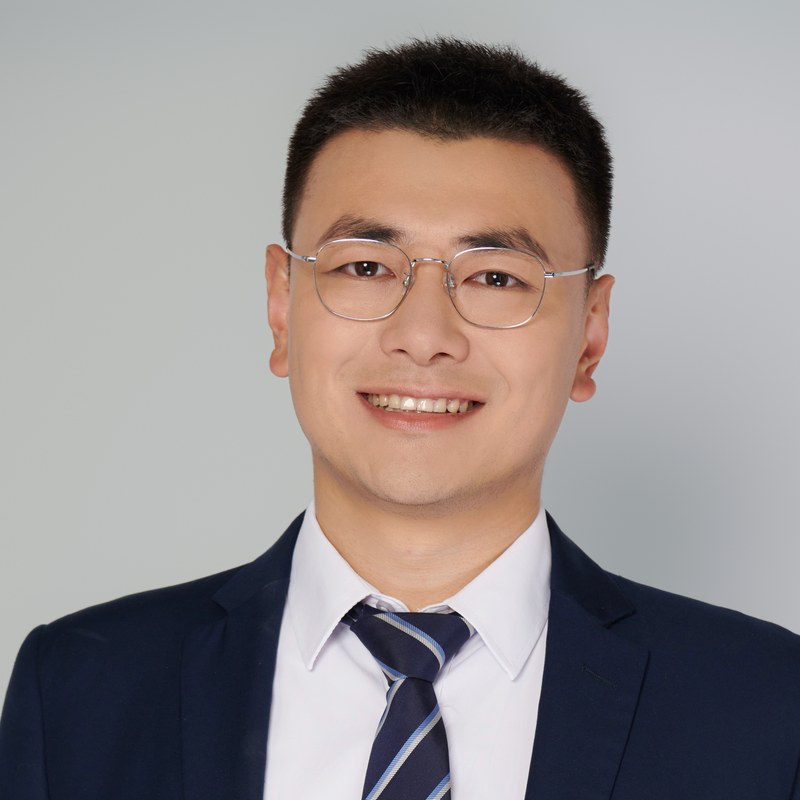
About Me
Zeyu Gao
I am a postdoctoral researcher in the Department of Oncology at the University of Cambridge, affiliated with the Crispin Lab, the CRUK Cambridge Centre, and the Early Cancer Institute. My work develops machine learning methods for whole-slide pathology, multimodal foundation models, spatial omics, and clinically relevant prediction from histopathology.
Recent Highlights
Our work on LLM-based reconstruction of longitudinal clinical trajectories in chronic liver disease was published in npj Precision Oncology.
TMEvolve and PathNavigate were accepted to NeurIPS 2026.
ALPaCA was published in Nature Communications.
A £100,000 Early Detection and Diagnosis Committee Primer Award was funded for multimodal pathology foundation models, with Zeyu as Principal Investigator.
LFFA was published in Bioinformatics.
View allShow less
A review on multiscale computational pathology was published in Intelligent Oncology.
AGE-MIL was accepted to MICCAI 2026.
PathCTM was accepted to ICML 2026.
CARE was accepted to CVPR 2026.
PH2ST was accepted to Medical Image Analysis.
HAAF was accepted to WWW 2026.
SMMILe was published in Nature Cancer.
Featured Publications
 2026
2026TMEvolve
Models whole-slide images as dynamic tumor microenvironment fields, combining adaptive tissue regions with concept-guided interactions for slide-level prediction.
 2026
2026ALPaCA
A slide-level large vision-language model framework for whole-slide pathology question answering across cancer types and tissue sites.
 2026
2026PathCTM
PathCTM accelerates gigapixel pathology analysis through adaptive continuous reasoning across magnifications, reducing patch usage and inference time by about 96% while preserving AUC.
 2026
2026CARE
A molecular-guided pathology foundation model with adaptive region modeling for whole-slide image analysis across 33 downstream tasks.
 2026
2026PH2ST
A spatial transcriptomics-guided hypergraph framework that uses limited ST signals to drive multi-scale histological learning.
 2025
2025SMMILe
A measurable multi-instance learning framework for accurate spatial quantification and clinically useful pathology analysis.
 2025
2025ProGIS
A prototype-guided interactive segmentation framework for pathological images with efficient prompt-based structure delineation.
 2025
2025CoxKAN
An interpretable Cox proportional hazards Kolmogorov-Arnold Network for high-performance survival analysis in medicine.
2023LeukemiaMIL
A hierarchical multi-instance learning framework with an information bottleneck for patient-level leukemia classification from bone marrow smears.
2023MinPointMTL
A semi-supervised multi-task framework that jointly learns cancer region detection and subtype classification under weak supervision in whole-slide images.
2022G2LContrast
An unsupervised multi-granularity representation learning framework for tissue segmentation in histopathology.
 2021
2021CHRNet
A composite high-resolution framework for nuclei grading in clear cell renal cell carcinoma pathology images.
2021IBViT
An instance-based vision transformer for fine-grained papillary renal cell carcinoma subtyping from histopathological images.
2020MinPointRCC
A weakly supervised framework showing how minimal point annotations can support effective renal cancer detection and subtyping on whole-slide images.
Selected Talks and Presentations
- June 2026 · Multimodal Foundation Models and Vision-Language Models in Computational Pathology
Invited talk at the Department of Genomic Medicine Summer Conference 2026 in Cambridge.
- June 2026 · From Multimodal Fusion to Multimodal Foundation Models
Invited talk in Plenary 2 at AI in Oncology 2026 in Paris.
- May 2026 · Multimodal foundation models and vision-language models in computational pathology
Invited talk at the Artificial Intelligence for Oncology Conference 2026 in Milan.
- March 2026 · Multimodal Foundation Models
Invited webinar talk for the 5th Artificial Intelligence in Precision Oncology webinar series.
- September 2025 · Multimodal AI for Cancer Research
Invited talk at the ESMO Molecular Analysis for Precision Oncology Congress in Paris.
- August 2025 · Multiomics for Cancer
Invited lecture at Oxford ML School 2025.
- June 2025 · Multimodal and Multiomics Foundation Models
Invited lecture at the Artificial Intelligence in Cancer Research Summer School 2025 in Corfu.
Selected Honors
- CRUK Primer Award, Principal Investigator (£100,000, 2026-2027).
- The Royal Society Research Grants 2025 Round 2, Co-Led (£30,000).
- EPSRC-funded high-performance computing project, Key Investigator (40,000 GPU hours, approx. £20,000).
- Postdoctoral Fellow, Trinity College Cambridge (2024-2026).
- Excellent Postgraduate of Xi’an Jiaotong University (2021-2022).
- MICCAI Student Travel Award (2021).
Training
I received my Ph.D. in Computer Science from Xi’an Jiaotong University in 2023, jointly trained by the School of Computer Science and the School of Mathematics and Statistics under the supervision of Prof. Chen Li and Prof. Deyu Meng. Before that, I completed my M.S. in Artificial Intelligence at Xidian University under the supervision of Prof. Xiangrong Zhang, as well as my B.S. in Electronic Engineering there.